
Training & Behavior
Why Australian Shepherds Need a Job: Signs Your Aussie Is Bored and What to Do About It
Is your Australian Shepherd bored? Learn the signs of an under-stimulated Aussie, why jobs and enrichment matter more than extra exercise, and what to do about it.
By The Aussie Standard · Updated September 2026
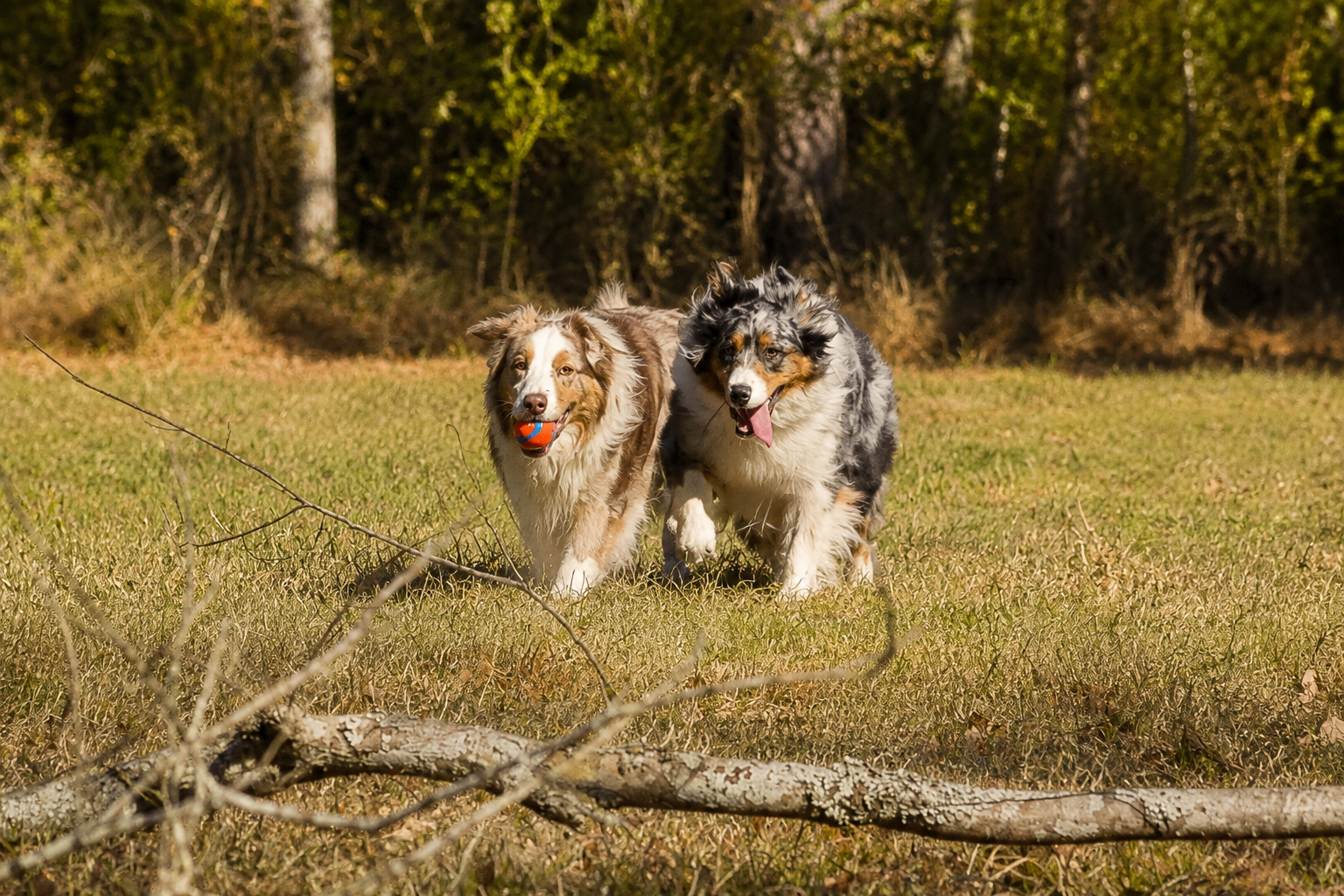
Australian Shepherds were bred to work. That matters.
They are not just active dogs. They are problem solvers, pattern readers, motion trackers, decision makers, and highly observant companions. When an Aussie does not have enough meaningful work to do, that energy often goes somewhere else.
Sometimes that looks like barking. Sometimes it looks like chewing, pacing, shadow chasing, herding the kids, obsessing over the fence line, or following you from room to room waiting for something to happen.
The solution is not always more exercise.
Very often, the better answer is giving your Australian Shepherd a job.
What “having a job” actually means
A job does not have to mean working livestock.
For a pet Australian Shepherd, a job can be anything that requires the dog to think, make choices, follow cues, solve a problem, or complete a task.
That can include:
- finding hidden food
- carrying an item
- learning names of toys
- helping with a household routine
- completing a food puzzle
- practicing place work
- retrieving specific objects
- searching for a family member
- following a scent trail
- learning a new trick
- waiting for permission before taking something
- working through an obstacle course
- participating in structured enrichment
Why Australian Shepherds get bored so easily
Australian Shepherds are intelligent, observant, and highly responsive to their environment.
That combination can be fantastic when they are engaged.
It can also create problems when they are under-stimulated.
A bored Aussie does not usually become less active. It often becomes more inventive.
And that is where owners start seeing behaviors they do not like.
Signs your Australian Shepherd may be bored
1. Excessive barking
If your Aussie seems to bark at every sound, movement, person, dog, delivery truck, leaf, or squirrel, boredom may be contributing.
Barking can become a self-created job.
The dog starts monitoring the environment because nothing else is demanding its attention.
2. Destructive chewing
Chewed shoes, furniture, baseboards, blankets, and household objects can all be signs of unmet mental needs.
Chewing is naturally rewarding, and bored dogs often create their own stimulation.
3. Pacing or inability to settle
Some Aussies seem physically tired but still cannot switch off.
They wander.
They stare.
They follow you constantly.
They lie down, get back up, and repeat the cycle.
That may be a sign that the body has exercised but the brain has not finished working.
4. Herding people or other pets
Nipping at heels, body blocking, circling, chasing movement, and controlling other animals can be instinctive behaviors, but boredom can intensify them.
When an Aussie has no appropriate outlet, natural working behaviors can spill into everyday life.
5. Obsessive behavior
Some Australian Shepherds become fixated on reflections, shadows, spinning objects, windows, fences, or repetitive movement.
Any persistent obsessive behavior deserves attention, but lack of structured mental stimulation can make these patterns worse.
6. Constant attention seeking
An Aussie that repeatedly paws, nudges, vocalizes, brings toys, interrupts, or demands interaction may simply be asking for more engagement.
That does not mean you have to entertain your dog every minute.
It means the dog may need a better daily structure.
More exercise is not always the answer
This is one of the biggest mistakes owners make.
They see a high-energy dog and assume the solution is always more running, more fetch, longer walks, or more physical activity.
Exercise matters.
But physical exercise alone can create a fitter dog that still has an underused brain.
An Australian Shepherd that runs for an hour may still come home ready to supervise the entire household.
Mental work often produces a different kind of fatigue.
A short problem-solving session, scent game, training drill, or structured task can sometimes settle an Aussie more effectively than simply adding another mile to the walk.
For a deeper breakdown, see our guide on how to mentally tire out an Australian Shepherd.
And when you do add activity, it helps to know how much exercise an Australian Shepherd needs so the routine stays balanced rather than endless.
Jobs you can give your Aussie at home
You do not need special equipment.
You need consistency.
Meal work
Stop treating every meal like a passive event.
Use part or all of the meal for:
- scatter feeding
- towel rolls
- snuffle mats
- puzzle feeders
- food searches
- training repetitions
- hide-and-seek games
Toy cleanup
Teach your Aussie to pick up toys and place them in a basket.
This is a perfect breed-specific job because it combines movement, object recognition, impulse control, and completion.
Find it
Hide treats or toys around a room and ask your dog to search.
Start easy.
Make it harder over time.
Scent work is one of the simplest ways to create real mental fatigue.
Carry something
Some Aussies enjoy carrying soft items from one room to another.
You can teach a cue for carrying a toy, leash, towel, or lightweight object.
The point is not the object.
The point is the assignment.
Place work
Teach your Aussie to go to a designated bed or mat and remain there until released.
This is not passive.
For many high-drive dogs, staying still is work.
It builds impulse control and teaches the dog how to settle.
Named toy retrieval
Teach your dog the names of individual toys.
Start with one.
Then add another.
Over time, ask for specific items by name.
That creates a genuine cognitive task.
Build difficulty instead of endlessly adding time
This is important.
Do not just make every activity longer.
Make it more thoughtful.
For example:
Easy: Hide a treat in plain sight.
Medium: Hide it behind furniture.
Hard: Hide several treats in different rooms and ask your dog to search systematically.
That progression keeps the dog learning.
Give your Aussie a daily rhythm
Australian Shepherds usually do better when they know what happens next.
A simple structure might look like:
Morning: walk plus short training session
Midday: food puzzle or scent game
Afternoon: independent chew or enrichment activity
Evening: structured play, place work, or a household job
The exact schedule does not matter as much as the predictability.
A dog that knows work is coming is often less likely to invent its own.
Do not turn every moment into stimulation
There is a balance.
Your Aussie also needs to learn how to do nothing.
A good routine should include both meaningful work and intentional downtime.
If you constantly entertain your dog, you can accidentally create a dog that expects nonstop engagement.
That is not the goal.
The goal is a dog that understands: sometimes we work. Sometimes we rest.
What if your Aussie still seems restless?
If your dog is getting regular exercise, training, enrichment, and downtime but still seems unusually restless, consider whether the issue is really boredom.
Other factors can include anxiety, overstimulation, lack of sleep, inconsistent routines, frustration, insufficient training clarity, or environmental triggers.
Boredom is common, but it is not the only explanation.
Start with one job
You do not need to redesign your dog’s entire life overnight.
Pick one task.
Teach it clearly.
Repeat it daily.
Then add another.
Australian Shepherds often thrive when their days contain small moments of responsibility.
They do not need a farm.
They need something meaningful to do.
And when you give an Aussie the right kind of work, you often get something much more valuable in return: a calmer dog, better focus, fewer problem behaviors, and a stronger relationship built around communication and purpose.
Want a structured place to start?
If you want a simple way to build these ideas into your routine, start with the Free 7 Day Aussie Enrichment Challenge.
Each day gives you one specific activity, exact setup instructions, materials needed, and difficulty levels so you can build a more consistent enrichment routine without guessing what to do next. For the full reasoning behind the approach, see the Complete Australian Shepherd Enrichment Guide.
Join the Aussie Pack for practical Australian Shepherd tips, gear recommendations, and updates on the upcoming 30-Day Aussie Enrichment Blueprint.
Educational disclaimerThis content is for general educational purposes and is not a substitute for veterinary or professional training advice. Consult a qualified professional regarding pain, health concerns, aggression, anxiety, or serious behavior changes.

The Complete Australian Shepherd Enrichment Guide
The cornerstone guide to keeping a herding brain occupied — what enrichment actually is, how much an Aussie needs, and how to build a week you can sustain.
Read More
How to Mentally Tire Out an Australian Shepherd
Why more mileage stops working, and what actually produces a settled Aussie by evening.
Read MoreHow to Mentally Stimulate an Australian Shepherd: 15 Enrichment Ideas That Actually Work
Fifteen practical ways to give an Australian Shepherd's brain the work it needs — search games, training, sniffing, choice and a real off switch.
Read More