
Training and Behavior
How Much Exercise Does an Australian Shepherd Need? A Realistic Daily Guide
Most healthy adult Australian Shepherds need meaningful activity every day, but more mileage is not always better. The right routine combines physical exercise, mental work, and enough rest to help the dog settle.
By The Aussie Standard · Updated September 2026
Featured image
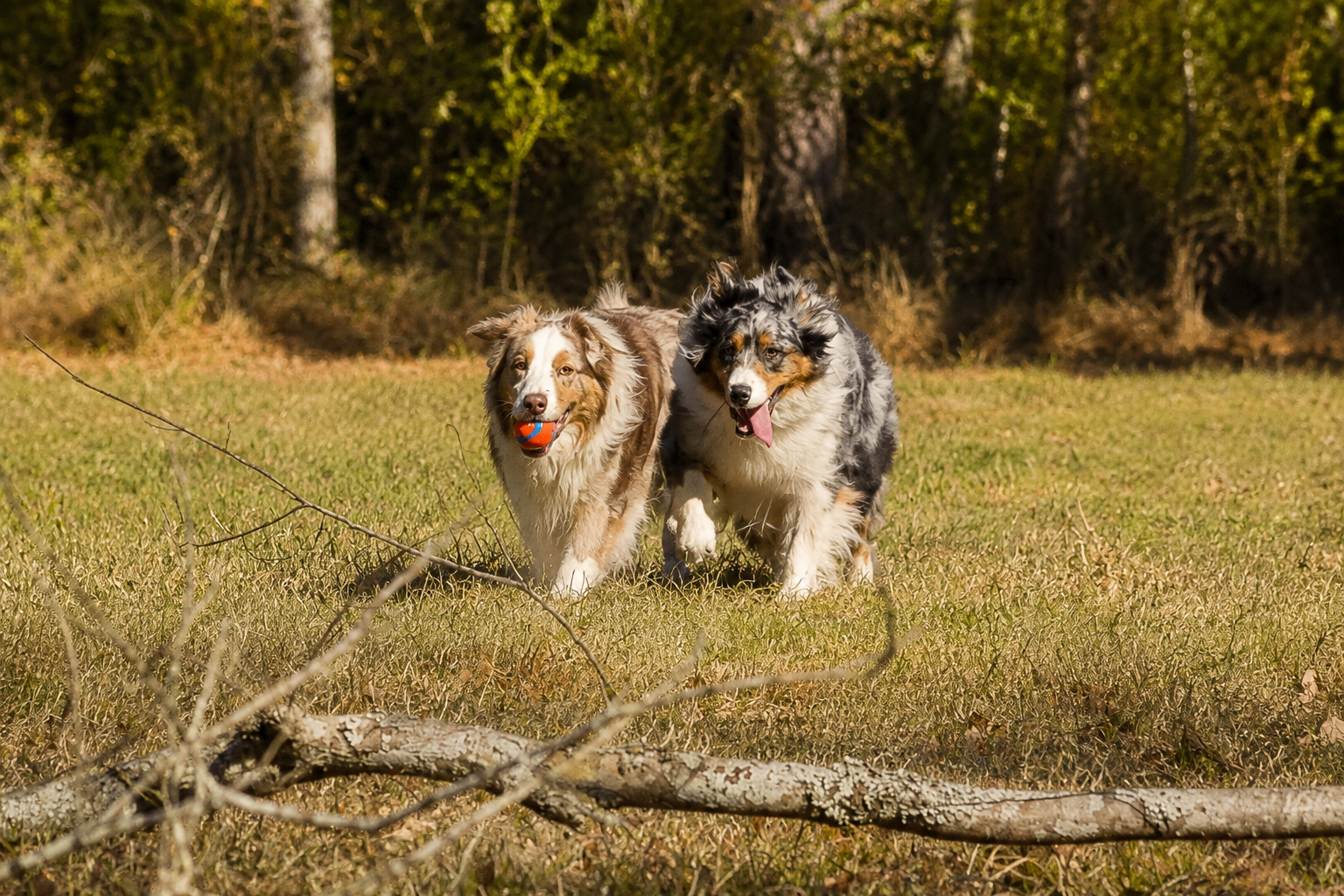
Needed: a natural photograph of an adult Australian Shepherd walking on a wooded trail beside its owner in soft morning light. Do not use a puppy image.
2400 × 1350 px · 16:9 · minimum 1600 px wide · WebP or high-quality JPEG
Australian Shepherds were developed to work closely with people, notice movement, make decisions, and stay engaged for long periods. That history helps explain why many Aussies struggle when their days contain little more than a quick trip outside and a bowl of food.
The breed needs regular activity, but the goal is not to exhaust the dog at any cost. A sustainable routine should support fitness, give the brain useful work, and teach the dog how to rest when the work is finished.
How much exercise most Australian Shepherds need
For many healthy adult Australian Shepherds, a useful starting range is 60 to 120 minutes of total activity each day. That time does not need to happen all at once, and it should not consist entirely of running or fetch. Two or three shorter sessions usually produce a better day than one long burst followed by hours of boredom.
Treat that range as a starting point, not a rule. A calm adult with a steady household routine may be satisfied near the lower end. A younger, high drive dog may need more structure and challenge. Heat, humidity, conditioning, health, and the difficulty of the activity can change what is appropriate on any given day.
Ten minutes of focused scent work can be more demanding than ten minutes of walking the same block. A trail walk with hills and new smells asks more from the dog than pacing beside a bicycle on flat pavement. Time alone does not tell the whole story.
Why the right kind of activity matters
Australian Shepherds often adapt quickly to repetitive exercise. If the answer to every restless evening is another long run, the dog may become fitter without becoming calmer. You can accidentally build an athlete that expects harder exercise every day.
A better routine uses several kinds of work. Physical activity supports the body. Sniffing, training, and problem solving occupy the brain. Controlled pauses and place work teach the nervous system to come back down.
If your dog creates its own entertainment through barking, chewing, pacing, or herding the household, read Why Australian Shepherds Need a Job. It explains why purposeful work often helps more than adding distance.
Exercise needs by life stage
Australian Shepherd puppies
Puppies need movement, exploration, play, and training, but they do not need adult endurance work. Their activity should come in short periods with plenty of sleep between them. Free movement on safe surfaces, gentle walks, social exploration, short training sessions, and play with appropriate partners are usually better choices than long runs or repeated high impact jumping.
Watch the puppy rather than the clock. A puppy that becomes wild, mouthy, clumsy, or unable to focus may be overtired. Stop before the puppy reaches that point. Ask your veterinarian about exercise limits if the puppy has an injury, unusual gait, or orthopedic concern.
Adolescent Aussies
Adolescence can be the hardest stage. The dog looks nearly grown and has more stamina, but impulse control is still developing. This is when owners often respond to chaos by adding endless fetch or running.
Keep building fitness gradually, but put equal effort into leash skills, recall, waiting, place work, and calm transitions. An adolescent Aussie needs practice making good decisions while excited. Pure speed will not teach that skill.
Healthy adult Aussies
A healthy adult can usually handle the widest variety of activity. Brisk walks, hiking, swimming, structured fetch, agility foundations, scent work, obedience, and trick training can all fit. Rotate activities so the dog uses different muscles and does not become obsessed with one game.
Harder days should be followed by easier ones when needed. Fitness improves during recovery, not only during the activity itself.
Senior Aussies
Older Australian Shepherds still benefit from daily movement and mental engagement. The routine may need shorter walks, gentler terrain, more warm up time, and longer recovery. Sniff walks, simple searches, low impact training, and comfortable outings help preserve mobility without asking the dog to work through pain.
A sudden drop in stamina, reluctance to rise, limping, heavy panting, or a change in movement deserves veterinary attention. Do not assume every slowdown is normal aging.
What counts as good exercise for an Aussie
Sniff walks
A sniff walk lets the dog investigate instead of marching at a fixed pace. It may cover less distance, but it offers information, choice, and natural decompression. Use a secure leash or long line where appropriate and allow time to read the environment.
Structured walks
A structured walk gives the dog periods of loose leash movement, check ins, direction changes, and calm passing practice. It is useful for manners and focus. It does not need to be rigid from start to finish. Alternate focused walking with permission to sniff.
Fetch with rules
Fetch can be valuable when it includes waiting, release cues, clean returns, and breaks. Repetitive sprinting with no pause can create frantic arousal and place a great deal of stress on the body. Keep sessions short, use safe footing, and stop while the dog is still moving well.
Hiking and trail walks
Trails provide varied terrain, new smells, and changing surroundings. Build distance gradually and account for heat, humidity, water access, paw condition, and the dog's current fitness. A weekend hike does not replace a reasonable routine during the rest of the week.
Training and scent work
Training is activity. A ten minute session that requires focus, restraint, and problem solving can take the edge off without pounding joints. Scent searches, named toy retrieval, trick training, and food puzzles work especially well on hot or rainy days.
For practical indoor options, use How to Mentally Stimulate an Australian Shepherd.
A realistic daily routine
A useful routine spreads activity across the day and changes the type of work. This example fits many healthy adult Aussies, but it should be adjusted for the individual dog.
Morning
Twenty to thirty minutes of walking with sniffing, followed by five minutes of simple training.
Midday
A food puzzle, scatter feed, short search game, or a few minutes of toy work.
Late afternoon
Thirty to forty five minutes of walking, hiking, structured play, or another physical activity.
Evening
A calm chew, place work, gentle grooming, or a short search followed by quiet time.
This is roughly 60 to 90 minutes of planned activity plus a few small mental tasks. Some dogs will need more. Others will be content with less. The best routine is the one that produces a dog who is fit, engaged, and able to relax afterward.
Signs your Aussie may need more activity
A lack of useful activity can show up as:
- restlessness at the same time each day
- persistent attention seeking after long periods of inactivity
- destructive chewing or digging
- excessive monitoring and barking
- rough play that escalates quickly
- invented jobs such as chasing shadows or patrolling windows
These behaviors can also come from anxiety, pain, poor sleep, unclear training, or environmental stress. Do not treat exercise as the automatic fix for every behavior problem. Look at the whole day.
Signs the routine may be too much
More exercise is not harmless when the dog is struggling to recover. Watch for:
- stiffness or limping after activity
- lagging behind or repeatedly stopping
- raw paw pads or damaged nails
- unusually heavy panting or slow recovery
- reluctance to repeat an activity the dog usually enjoys
- increasing irritability, frantic behavior, or difficulty sleeping
Stop the activity if your dog shows pain, weakness, disorientation, breathing distress, or collapse. Heat illness and injuries can become emergencies quickly. Contact a veterinarian for concerning or persistent symptoms.
Why some Aussies never seem tired
Some Australian Shepherds finish a long outing and immediately ask for more. That does not always mean the outing was too short. The dog may be physically conditioned, highly aroused, or unfamiliar with settling after activity.
End active sessions with a predictable transition. Offer water, allow a short cool down, then guide the dog toward a mat, crate, quiet room, or calm chew. The routine teaches that activity has a beginning and an end.
Avoid throwing the ball every time the dog demands it. If constant pestering always restarts the game, the dog learns persistence rather than relaxation. Meet the dog's needs, then protect the rest period.
For help creating brain work that does not depend on more mileage, read How to Mentally Tire Out an Australian Shepherd.
How to build the right routine
Start with the routine your dog is already doing and change one piece at a time. Add ten or fifteen minutes, replace part of a repetitive game with sniffing or training, or split one long session into two. Watch the dog's behavior during the activity and for the rest of the day.
A balanced week should include:
- regular walking and free movement
- one or more activities that require thinking
- practice settling after excitement
- lighter days after unusually demanding work
- enough sleep and uninterrupted downtime
You are looking for steady improvement, not exhaustion. The right amount of exercise helps your Aussie move comfortably, focus more easily, and settle when the day slows down. If the routine leaves the dog sore, frantic, or dependent on nonstop entertainment, it needs adjustment.
Give the brain a job too
Physical exercise is only part of meeting an Australian Shepherd's needs. A short search, training session, or problem solving task can make an ordinary walk more useful and help the dog finish the day satisfied.
Start with the Free 7 Day Aussie Enrichment Challenge. Each day gives you one practical activity that can fit around your dog's normal exercise routine.
Educational disclaimerThis article provides general educational information and is not a substitute for veterinary or professional training advice. Ask your veterinarian about exercise if your dog is a puppy, senior, overweight, recovering from surgery, poorly conditioned, or living with a medical or orthopedic condition.
Why Australian Shepherds Need a Job: Signs Your Aussie Is Bored and What to Do About It
Barking, chewing, pacing, herding the kids — a bored Aussie invents work. Here is how to give yours a real job instead.
Read MoreHow to Mentally Stimulate an Australian Shepherd: 15 Enrichment Ideas That Actually Work
Fifteen practical ways to give an Australian Shepherd's brain the work it needs — search games, training, sniffing, choice and a real off switch.
Read More
How to Mentally Tire Out an Australian Shepherd
Why more mileage stops working, and what actually produces a settled Aussie by evening.
Read More
The Complete Australian Shepherd Enrichment Guide
The cornerstone guide to keeping a herding brain occupied — what enrichment actually is, how much an Aussie needs, and how to build a week you can sustain.
Read More