
Enrichment
How to Mentally Stimulate an Australian Shepherd: 15 Enrichment Ideas That Actually Work
Discover 15 practical ways to mentally stimulate an Australian Shepherd, prevent boredom, and give your Aussie a satisfying job at home.
By The Aussie Standard · Updated August 2026
Featured image
Featured photograph coming soon.
2400 × 1350 px · 16:9 · minimum 1600 px wide · WebP or high-quality JPEG
Australian Shepherds were built to notice movement, solve problems, work closely with people, and make decisions. That intelligence is part of what makes them remarkable companions. It is also why a walk around the block is not always enough.
An Aussie whose brain is not being used will often create a job. That job might be barking at every passing car, herding children, shadowing you from room to room, dismantling a throw pillow, or turning the backyard into an excavation site.
The answer is not endless exercise. More physical activity can simply create a fitter dog who still does not know how to settle. A better approach combines movement, problem-solving, sniffing, training, and intentional rest.
Here are 15 practical ways to give an Australian Shepherd’s brain the work it needs.
Signs your Australian Shepherd may be bored
Boredom does not look exactly the same in every dog. Common signs include:
- Destructive chewing or digging
- Excessive barking at ordinary sounds or movement
- Pacing and difficulty settling
- Constant attention-seeking
- Chasing, nipping, or trying to herd people and other pets
- Stealing objects to start a game
- Becoming overexcited by small events
- Repetitive behaviors that seem difficult to interrupt
Boredom is not the only explanation
These behaviors do not automatically mean boredom. Pain, fear, anxiety, and other health or behavior concerns can look similar. Sudden or serious changes deserve professional attention.
1. Replace the food bowl with a simple search game
One of the easiest ways to add enrichment is to stop serving every meal in a bowl. Scatter kibble across a clean floor, safe section of the yard, snuffle mat, or folded towel and let your Aussie find it.
Start easy. The goal is to encourage sniffing and problem-solving, not create frustration. As your dog understands the game, make the hiding places slightly more challenging.
2. Roll kibble inside an old towel
Lay a towel flat, scatter kibble across it, and roll it loosely. Let your dog unroll the towel with their nose and paws. For experienced dogs, tie the rolled towel in a very loose knot.
Supervise the activity and remove the towel if your dog begins tearing or swallowing fabric.
3. Use food puzzles—but rotate them
Puzzle feeders can be useful, but the same puzzle loses much of its value once a dog has memorized it. Keep two or three options in rotation rather than leaving every toy available all the time.
Choose puzzles that match your dog’s current ability. A puzzle that is too easy becomes a bowl with extra steps. One that is too hard may cause frustration or destructive chewing.
4. Teach the names of favorite toys
Aussies are often excellent at connecting words with objects. Start with one toy. Say its name before presenting it, playing with it, or asking your dog to retrieve it. Once that name is reliable, introduce a second toy.
Eventually, place both toys on the floor and ask for one by name. This turns an ordinary game of fetch into a language and memory exercise.
5. Create a “find it” game
Ask your dog to wait while you hide a treat or favorite toy nearby. Release them with a cue such as “find it.” Begin with the object partly visible, then gradually use more difficult hiding spots.
Keep early searches short and successful. The best enrichment leaves a dog confident and satisfied.
6. Practice short training sessions
Five focused minutes can be more mentally demanding than a long, distracted session. Practice useful skills such as place, wait, touch, leave it, drop it, recall, and settling on a mat.
End while your dog is still engaged. Progress matters more than perfection.
7. Turn household routines into jobs
Your Aussie does not need livestock to feel useful. Ask them to carry a soft item to another room, put toys in a basket, wait while you open a door, or go to a designated place while groceries come inside.
The job should be clear, safe, and achievable. What matters is that your dog learns their choices can lead to a successful outcome.
8. Let your dog sniff on walks
A walk does not need to be a nonstop march. Sniffing provides information, encourages natural behavior, and can be mentally tiring.
Try giving your Aussie part of the walk to choose the pace and investigate safe areas. A shorter sniff-focused walk may be more satisfying than covering another mile at a strict heel.
9. Change the walking route
A new street, park, surface, or direction gives your dog different scents and environmental information to process. You do not need a major adventure. Even walking a familiar route in reverse can add novelty.
10. Build a safe backyard obstacle course
Use stable, low-risk household or yard items to create simple challenges. Your dog might walk around cones, step over a low pole, pause on a platform, or weave between objects.
Avoid unstable surfaces, forced jumping, and anything that could strain joints. The purpose is thoughtful movement, not speed.
11. Use cardboard-box enrichment
Place treats inside a few open boxes and let your Aussie search through them. Add loosely crumpled paper for dogs who will not eat it. Nesting smaller boxes inside larger ones can increase the challenge.
Supervise closely. Cardboard enrichment is not appropriate for dogs who swallow paper, tape, or packaging.
12. Freeze part of a meal
Stuff a suitable food toy with your dog’s normal food and freeze it. This can extend mealtime and encourage licking, which many dogs find calming.
Introduce frozen activities gradually and count the food as part of the dog’s daily intake rather than adding it on top.
13. Arrange an appropriate play session
For dogs who enjoy other dogs, a well-matched playmate can provide movement, communication, and decision-making. Good play includes pauses, role reversals, and both dogs choosing to reengage.
More dogs do not automatically mean more enrichment. Overwhelming group play can increase stress instead of relieving it.
14. Teach an off switch
Mental stimulation is only half the equation. An Australian Shepherd also needs to learn that nothing is happening—and that this is safe.
Reward calm behavior on a mat or bed. Begin after your dog has had reasonable physical and mental activity, then gradually practice during more ordinary parts of the day. Constant entertainment can create a dog who expects constant entertainment.
15. Give your Aussie small choices
Choice is mentally meaningful. Let your dog choose between two appropriate toys, select the direction at a safe intersection, or decide whether to engage with an optional activity.
Structure still matters. The goal is not to let the dog control every situation. It is to give them safe opportunities to think and communicate.
How much mental stimulation does an Australian Shepherd need?
There is no universal number of minutes. Age, health, temperament, training history, environment, and the difficulty of the activity all matter.
A useful starting point is to spread several short activities throughout the day rather than relying on one long session. A meal search, five minutes of training, a sniff-focused walk, and a calm frozen activity can provide more variety than repeatedly throwing a ball until the dog is exhausted.
Watch the dog in front of you. Good enrichment should usually leave your Aussie satisfied, not frantic, sore, or unable to settle.
What not to do
- Do not make every activity harder just because your Aussie is intelligent.
- Do not use high-impact exercise as the only answer to boredom.
- Do not leave shredding, fabric, or food toys unsupervised if your dog may swallow pieces.
- Do not force a nervous dog to interact with unfamiliar objects.
- Do not ignore sudden behavior changes or serious signs of distress.
A simple enrichment routine to try today
Start with this easy combination:
- Serve breakfast in a rolled towel or safe search game.
- Practice one useful skill for five minutes.
- Allow time for sniffing during a walk.
- Offer a calm activity in the evening.
- Reward your dog for settling afterward.
Give the brain a job, not just the body a workout
You do not need to keep your Australian Shepherd busy every minute. You need to offer the right balance of meaningful activity, clear expectations, and rest.
Give the brain a job, not just the body a workout.
Join the Aussie Pack for practical Australian Shepherd tips, gear recommendations, and updates on the upcoming 30-Day Aussie Enrichment Blueprint.
Educational disclaimerThis content is for general educational purposes and is not a substitute for veterinary or professional training advice. Consult a qualified professional regarding pain, health concerns, aggression, guarding, or serious behavior changes.

The Complete Australian Shepherd Enrichment Guide
The cornerstone guide to keeping a herding brain occupied — what enrichment actually is, how much an Aussie needs, and how to build a week you can sustain.
Read More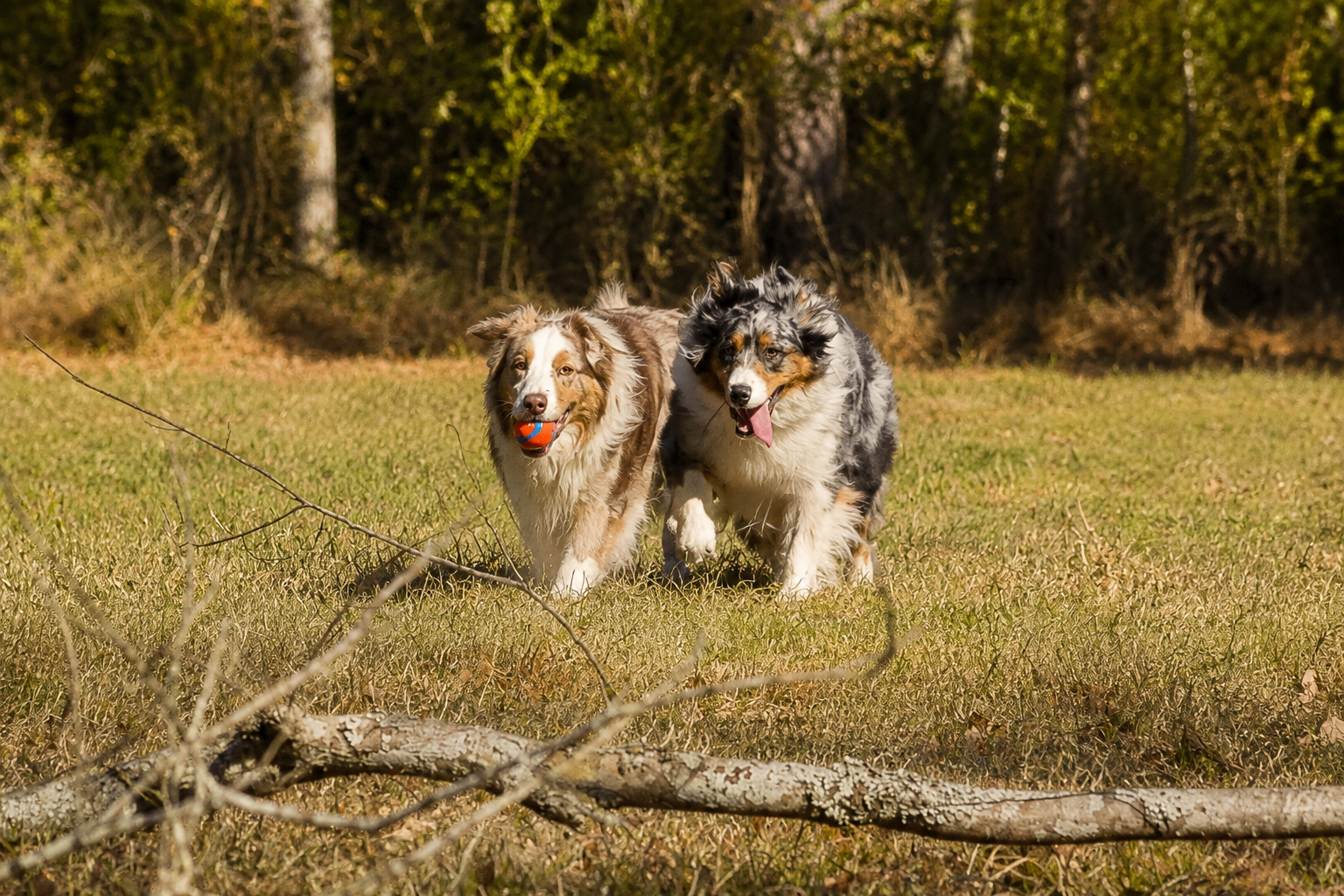
Why Australian Shepherds Need a Job: Signs Your Aussie Is Bored and What to Do About It
Barking, chewing, pacing, herding the kids — a bored Aussie invents work. Here is how to give yours a real job instead.
Read More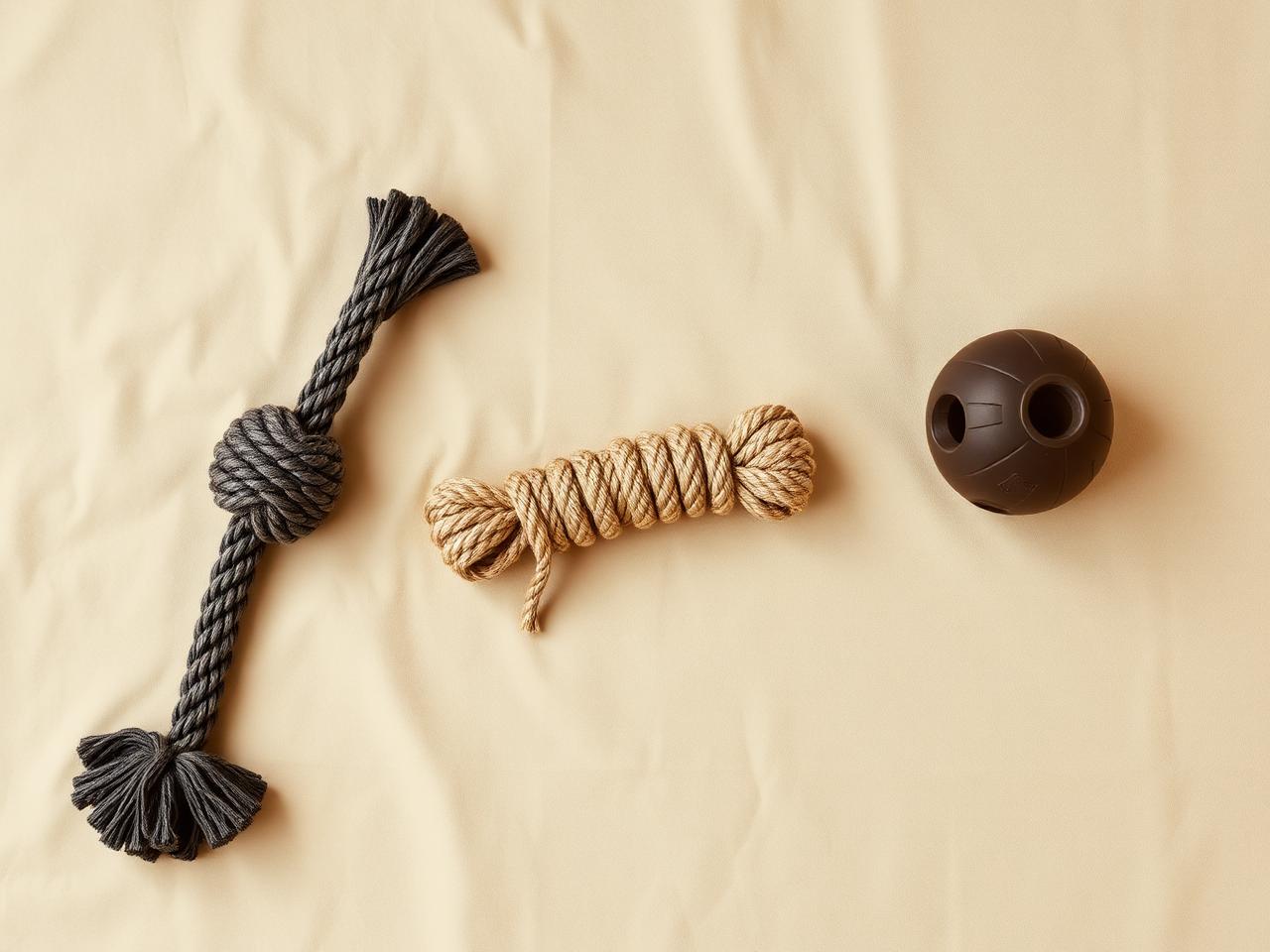
Best Enrichment Activities for Australian Shepherds
An activity list, not a shopping list — games that use what you already own and suit a herding brain.
Read More