Enrichment
Best Enrichment Activities for Australian Shepherds
Activity-first enrichment ideas for Australian Shepherds: scent games, hide-and-seek, recall games, obstacle work, food enrichment, rainy-day options and multi-dog activities.
By The Aussie Standard · Updated August 2026
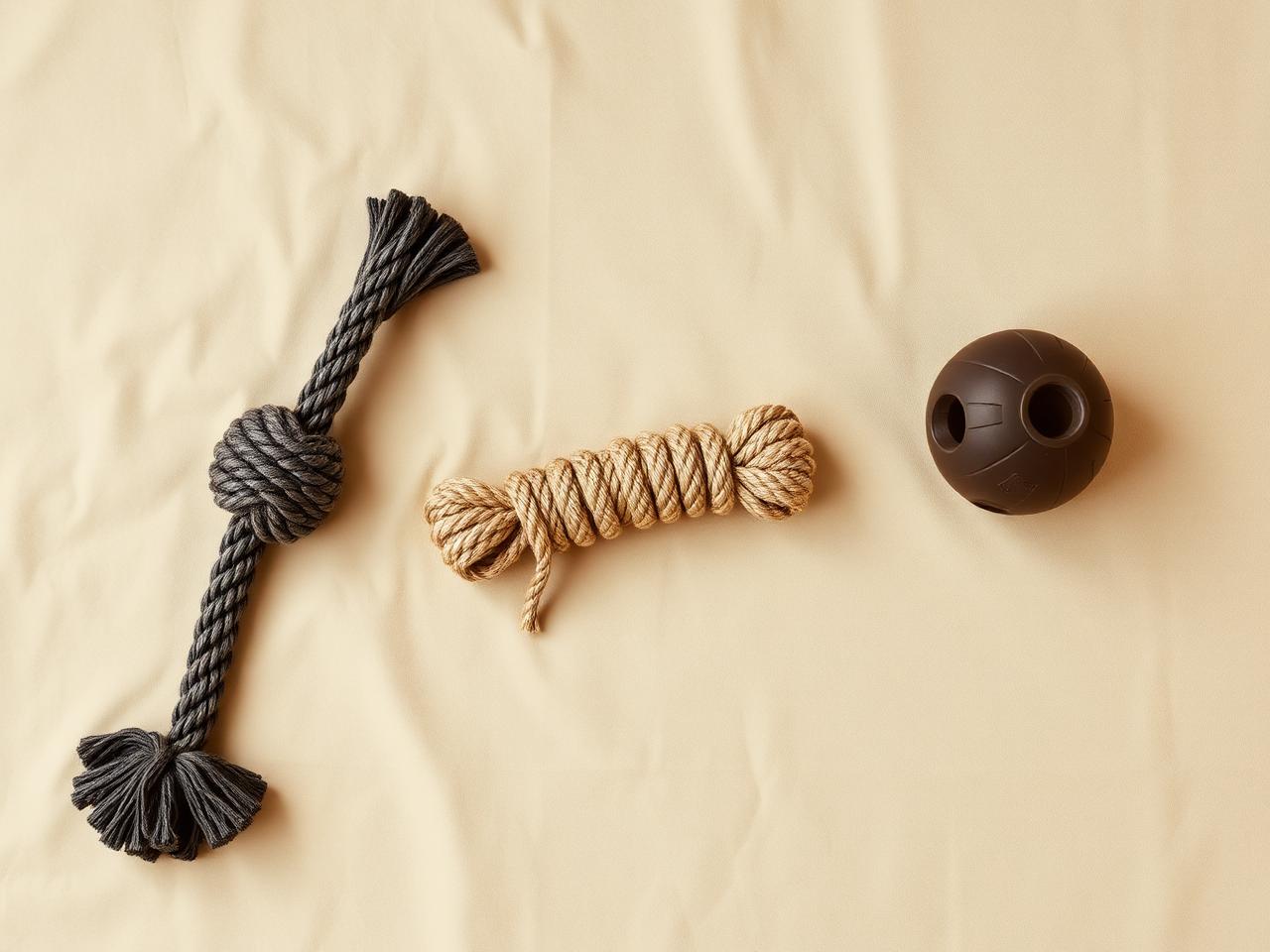
Most enrichment lists are really product lists. This one is not. Every activity below can be run with towels, boxes, cups, a long line and the food already in your dog's daily ration.
The activities are grouped by what they do — nose work, chase and recall, problem solving, movement, calm — so you can pick one that suits the moment rather than working through a list top to bottom.
Scent games
Scent work is one of the most reliable categories for this breed: tiring, low arousal, and workable in any room of the house.
- Ten-treat room search with the dog waiting out of sight
- Box search with one baited container among five
- Vertical hides on chair rungs, shelves and window ledges
- Dragged scent trail across the yard to a jackpot
- Snuffle-mat or grass scatter feeding
- Which hand — two fists, one baited, repeated in short rounds
Hide-and-seek
A version of scent work with a social payoff, and one of the few games that builds recall enthusiasm while lowering rather than raising arousal.
- Person hides while a helper holds the dog, then calls once.
- Toy hidden and named, with the dog sent to find it.
- Progressive hides: same room, then next room, then upstairs.
- Silent hides for a dog who has learned to use their nose instead of their ears.
Recall games
Recall is one behaviour that often benefits from being practised as a game rather than a drill. Framed as play, it stays reliable in the moments it actually matters.
- Restrained recalls between two people across a room or yard
- Long-line recalls with real distractions at a workable distance
- Hide-and-call in the house, paid generously
- Round-robin recalls with each family member holding a portion of the meal
Obstacle work
Body awareness is under-used with a breed this athletic. Slow, deliberate movement over and around objects is surprisingly demanding, and it suits dogs on restricted exercise.
- Weaving between chairs or cones at a walk
- Stepping over a ladder of broom handles laid flat
- Two paws, then four, onto a low stable platform
- Walking under a low draped blanket
- Circling an object in both directions on cue
Keep jumping conservative
Height work belongs with a growth-plate-safe plan for young dogs and with your veterinarian's input for older ones. Flat, slow work is where the value is anyway.
Training games
- Shaping a new behaviour from scratch with a cardboard box
- Trick chains linking three known behaviours
- Name-the-toy discrimination, adding one item at a time
- Place work while the household moves around the dog
- Impulse control at doors, thresholds and food bowls
- Chin rest and handling practice that doubles as grooming prep
Food enrichment
Meals are the enrichment budget you already have. Converting one meal a day into work is one of the most sustainable habits in this article.
- Scatter feeding across grass or a mat
- Frozen refillable toys for a long, calm session
- Muffin tin and tennis balls
- Food folded into a rolled towel
- Kibble hidden in several containers around one room
- Lick-based activities during the household's busiest hour
Supervised shredding activities
Shredding is a natural behaviour and a genuine outlet, and it is safe only with supervision and cleanup. Any dog who swallows material rather than tearing it should be given a different activity instead.
- Empty cardboard box with kibble sprinkled through crumpled paper
- Paper bag folded closed around a portion of food
- Egg carton with treats under the lids
- Cardboard tube pinched shut at both ends
Backyard activities
A yard on its own is not enrichment. Unstructured time outdoors is where fence-running and barking habits get rehearsed, so give the session a purpose and end it before the patrol starts.
- Scatter feeding in the grass
- A dig box of soil or sand with buried toys
- Long-line recall practice with real distractions
- A rotating set of novel objects to investigate
- Simple obstacle courses using what is already outside
- Shallow water play in warm weather, supervised
Indoor activities
- Room-to-room scent searches
- Hallway retrieves and stair recalls
- Three-minute shaping sessions
- Toy sorting and name discrimination
- Settle practice on a mat with a chew
- Low-platform body-awareness work
Rainy-day enrichment
A written indoor list is what keeps the routine alive through a bad week. Pick three from this set and the day is covered without anyone getting wet.
- Full meal delivered as a ten-hide indoor search
- Box-shredding session with the food inside
- Trick-chain training in a hallway
- Frozen refillable toy during your own work block
- Name-the-toy game with four items
- Calm chew and settle work in the evening
Enrichment for multi-dog homes
In a household with several Aussies the activities do not change — the management does. Dogs working side by side tend to speed each other up, and food in a shared space invites disagreement.
- Run all food-based activities in separate rooms, crates or pens.
- Rotate one-on-one sessions so each dog gets undivided attention weekly.
- Choose parallel sniffing over parallel chasing for group activities.
- Give each dog a defined settle spot for the wind-down.
- Collect empty puzzles and chews as soon as they are finished.
- Watch for the dog who quietly opts out — that one usually needs solo sessions.
Choosing the right activity for the moment
- Need calm before guests arrive: chew, lick mat, or slow scent search.
- Rainy afternoon with a restless dog: shaping session plus box search.
- Post-injury or restricted exercise: nose work and body-awareness work.
- Adolescent who cannot settle: food puzzle, then mat work.
- Puppy with the evening wiggles: two-minute find-it, then a chew in the pen.
FAQ
Common questions
- How many enrichment activities does an Aussie need per day?
- Two or three short ones is a realistic target for most adult Australian Shepherds — typically one food-based, one nose-based, and one calm activity in the evening.
- Are these activities safe for puppies?
- Most are, at shorter durations and lower difficulty. Keep jumping and repetitive impact work conservative while a young dog is still growing, and check specific concerns with your veterinarian.
- My Aussie ignores enrichment and asks for fetch instead. What now?
- Start with food-based activities using the daily ration when the dog is hungry, and run them before rather than after high-arousal play. Nose work is hard to appreciate on a brain that is still buzzing.
The Complete Australian Shepherd Enrichment Guide
The cornerstone guide to keeping a herding brain occupied — what enrichment actually is, how much an Aussie needs, and how to build a week you can sustain.
Read MoreHow to Mentally Stimulate an Australian Shepherd: 15 Enrichment Ideas That Actually Work
Fifteen practical ways to give an Australian Shepherd's brain the work it needs — search games, training, sniffing, choice and a real off switch.
Read More
Best Puzzle Toys for Australian Shepherds
How to judge a puzzle for a fast problem-solver — difficulty, durability, introduction and the frustration line.
Read More