
Enrichment
Best Puzzle Toys for Australian Shepherds
What actually makes a good puzzle for an Australian Shepherd: difficulty levels, food puzzles, sliders and lifters, refillable toys, scent puzzles, introduction, frustration and supervision.
By The Aussie Standard · Updated August 2026
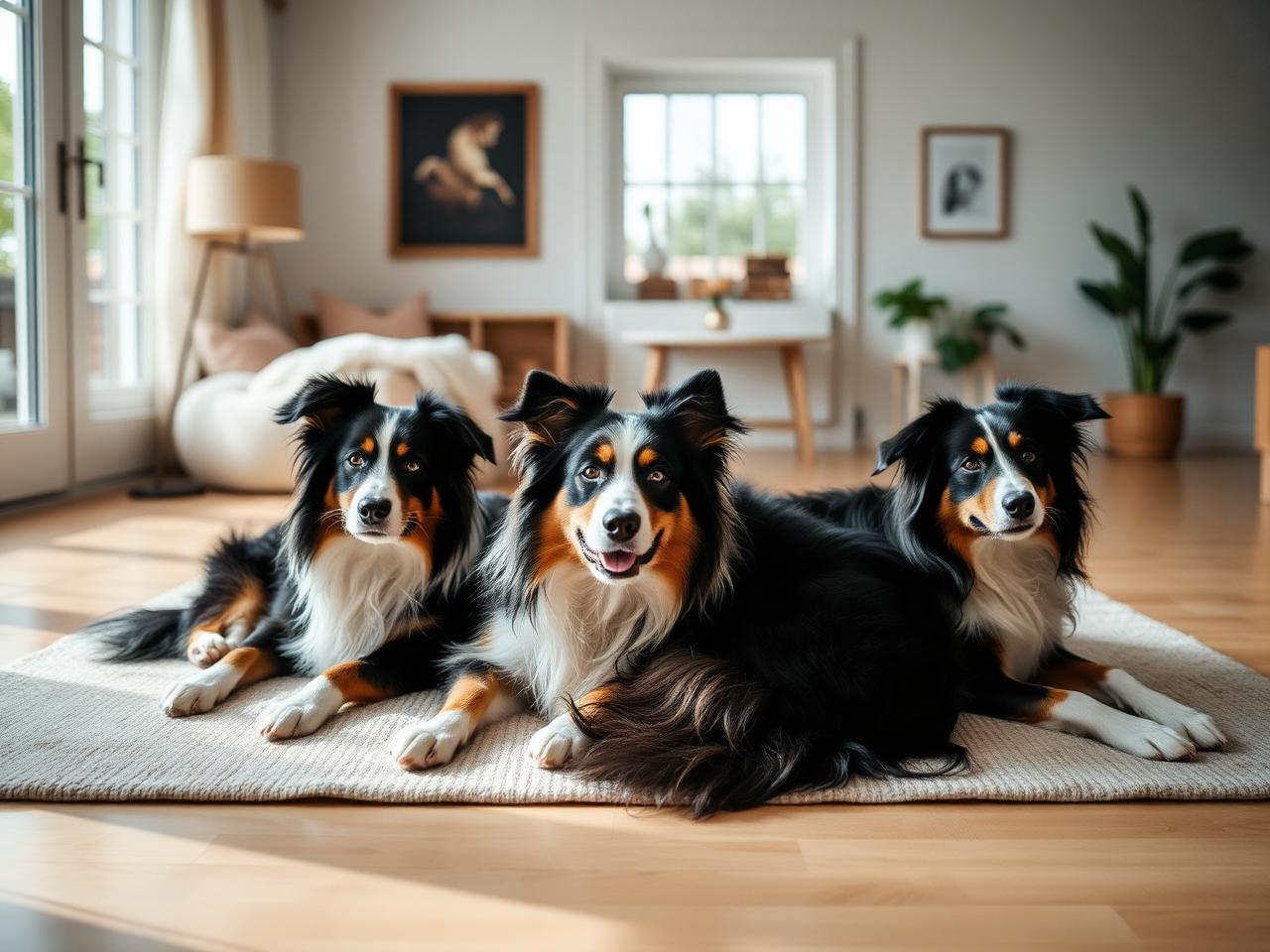
Australian Shepherds work through most puzzle toys quickly, which makes the usual advice — buy a puzzle, give it to the dog — a short-lived solution. The useful skill is knowing how to judge, introduce and progress a puzzle so it stays worth doing.
This article covers the criteria rather than the catalogue. The goal is to give you a way to judge any puzzle, whether it is bought, built, or already in the house.
What makes a good puzzle for an Aussie
The breed brings speed, persistence and a strong preference for activities that reward trying different things. A puzzle that only permits one repeated motion often gets solved and abandoned; one that rewards experimentation keeps its value.
- Multiple valid strategies rather than a single motion
- Adjustable difficulty — pieces you can add, remove or reposition
- A payout schedule that keeps the dog working rather than dumping everything at once
- Construction that suits a strong jaw and enthusiastic paws
- Stable on the floor, or usable with the dog holding it
- Easy to clean, because most of these hold food residue
Puzzle difficulty levels
Thinking in levels is more useful than thinking in brands. Move up only when the dog completes the current level confidently and without frustration.
Level one: obvious
Food visible, retrievable with a nose or a single paw swipe. This is where every puzzle starts, including for adult dogs meeting a new object.
Level two: one step
A lid to lift, a piece to slide, a container to tip. One deliberate action, immediate payoff.
Level three: sequenced
Two or three actions in order — lift, then slide, then retrieve. This is where most adult Aussies find genuine work.
Level four: combined
A puzzle hidden inside a search, a frozen filling inside a dispenser, or a puzzle placed somewhere the dog has to find first.
Food-based puzzles
Anything that makes a dog work for their ration counts, and the daily meal is one of the most sustainable sources of puzzle food. Keep the calories inside the daily total rather than on top of it — Aussies gain weight quietly under a thick coat.
- Slow-feeder bowls as a gentle first step
- Rolling and tipping dispensers that pay out as the dog moves them
- Tray puzzles with compartments and covers
- Homemade options: muffin tins, cups, boxes, rolled towels
Sliding and lifting puzzles
These are the classic tray-style puzzles, and they suit this breed well because they reward a deliberate paw or nose rather than brute force.
- Sliders reward a sustained horizontal push — often the hardest motion to learn.
- Lifters reward a hooked paw or a nose flip, usually the first motion a dog works out.
- Combination trays let you add pieces as skill grows.
- Weighted or grippy bases stop the puzzle sliding across the floor and frustrating the dog.
Refillable and stuffable toys
The most durable category of enrichment in most households, because the same object supports a different session every day depending on what goes in it and whether it is frozen.
- Loose dry filling for a quick session
- Layered filling with something soft to bind it for a longer one
- Frozen filling when you need thirty quiet minutes
- A pair of them so one is always prepared in the freezer
Licking is the point
The value here is not only the food. Sustained licking can help bring an aroused dog down, which makes these a useful closing activity for an evening.
Scent-based puzzles
For many Aussies, nose work produces more fatigue than paw work, and scent puzzles are easy to make at home. They are also the easiest to make harder — the dog never runs out of levels.
- Snuffle mats for a full portion of dry food
- Multiple identical containers with one baited
- A puzzle hidden inside the house so the search comes first
- Towel rolls and folded fabric with food layered inside
How to introduce a new puzzle
First impressions matter: a positive early experience makes it far more likely an object will be used for years rather than ignored after one attempt. Make the first three repetitions almost free.
- Load it with high-value food, not plain kibble, on day one.
- Leave every compartment open and the food visible.
- Let the dog find it themselves rather than presenting it.
- Stay nearby and quiet — no coaching, no hand-guiding.
- Close one compartment at a time across later sessions.
- Put it away while the dog is still interested.
Preventing frustration
A frustrated Aussie escalates: harder paws, barking, flipping the object, sometimes chewing the puzzle instead of solving it. That is information about difficulty, not stubbornness.
- Watch for stiffening, fast breathing, or force replacing thought.
- Step in early and make the next repetition easier.
- Cap sessions at ten to fifteen minutes.
- End on a success rather than on the dog giving up.
- Alternate puzzle days with scent days to keep the object novel.
Supervision and safety
- Puzzles are supervised activities — a dog who starts chewing components is finished for that session.
- Inspect for cracks, splinters and missing pieces before every use.
- Choose sizes that cannot be swallowed or wedged over the muzzle.
- Wash regularly; frozen and soft fillings leave residue.
- Retire damaged items rather than returning them to the toy bin.
- Any concern about swallowed material is a same-day veterinary call.
Durability considerations
This breed does not usually destroy puzzles out of aggression toward the object. They destroy them when the puzzle is too hard, when it moves around the floor, or when the dog has learned that chewing pays faster than solving.
- Prefer thicker, moulded construction over thin, brittle plastic.
- Look for removable pieces that can be replaced rather than voiding the whole puzzle.
- Non-slip bases reduce both frustration and damage.
- Match the object to the individual dog: a determined chewer needs a different category, not a harder puzzle.
Puzzles in multi-Aussie households
Puzzle work concentrates food in one spot, which is exactly the situation worth managing carefully when several dogs live together.
- One dog, one room, one puzzle — always.
- Collect empty puzzles before the doors open again.
- Give each dog their own objects rather than a shared pool.
- Match difficulty per dog; identical puzzles for different skill levels create pressure.
- Reunite the dogs only once everything is finished and put away.
Toy rotation keeps puzzles interesting
Availability is what kills a puzzle, not the design. A dog with everything out permanently owns a pile of familiar objects.
- Keep three to five items accessible and store the rest out of sight.
- Rotate weekly, mixing one puzzle, one chew, one tug and one fetch item.
- Hold one high-value puzzle back for the situations where you really need thirty quiet minutes.
- A returning puzzle after two weeks away is functionally new.
FAQ
Common questions
- How often should an Australian Shepherd get a puzzle?
- Once a day is a comfortable rhythm for most, usually built into a meal. Alternating puzzle days with scent-work days keeps both categories feeling fresh.
- My Aussie solves every puzzle in a minute. Is that a problem?
- It is normal for the breed. Raise difficulty by freezing the filling, adding a second step, or hiding the puzzle so a search has to happen first.
- Are homemade puzzles as good as bought ones?
- For scent and foraging work, often yes — boxes, towels and containers do the job well. Bought puzzles mainly add durability and reusable adjustable difficulty.
- Can two Aussies share a puzzle toy?
- Not at the same time. Concentrated food in one place is a common flashpoint, so run puzzles separately and collect them once each dog is finished.

The Complete Australian Shepherd Enrichment Guide
The cornerstone guide to keeping a herding brain occupied — what enrichment actually is, how much an Aussie needs, and how to build a week you can sustain.
Read More
Best Toys for Australian Shepherds
Durability, brain work and safe play — how to choose toys that hold up to a high-drive herding breed.
Read MoreBest Enrichment Activities for Australian Shepherds
An activity list, not a shopping list — games that use what you already own and suit a herding brain.
Read More